


Small Talk with garden designer and owner of Laurel Hill Gardens – Debbie Brophy
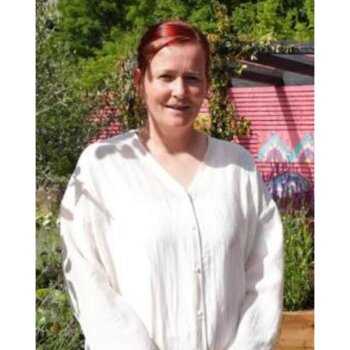
"It's never too late to take the leap into horticulture, it's something that can be achieved at any age" - Debbie Brophy talks about advice she would give to someone just starting their career in the industry
 Print
Print27 August 2026
In association with Gardenworld Nurseries
At Growtrade, we’re running an interview series titled ‘Small Talk’, where we talk to various influential members of Ireland’s horticulture trade.
This week’s conversation is with the garden designer and owner of Laurel Hill Gardens – Debbie Brophy.
How did you first get involved in the horticulture sector?
While in my previous job I began to do the postgraduate diploma in garden design with the Garden Design Academy. I had my daughter in 2022 and I completed the course in my evenings. I had been building up a stock of plants through propagation for many years in the background as well. I had also been doing some garden maintenance jobs and smaller design jobs.
I decided to apply for Super Garden in 2024 and went on to win it getting the opportunity to take the garden to Bloom in 2025 where I received a silver medal for the garden. I opened my own garden with a retail plant area that summer. Those three years felt like a whirlwind.
What was one of the proudest moments in your career to date?
The final moments of the Super Garden build. We were the last garden still building at midnight on the last night, it was raining all day, friends and family had made the journey and worked so hard to get it over the line and when the crew counted down the last few seconds I was so proud of our achievement and the fact that we had completed the garden for the homeowners. There were so many jobs left to finish at the beginning of the day, Gary, my partner, and myself didn’t think it would be possible to get them all complete, but we did and I was so grateful and proud of everyone’s efforts.
What was one of the greatest challenges you’ve faced in your career to date?
I have yet to embrace the use of software to develop designs. I still hand draw everything, that is the artist in me coming out, and I enjoy the process of developing a plan by hand. My clients also appreciate the look, time and effort that has gone into the process. I do feel, however, that it would be beneficial to be able to give a client a 3D render of the plan as sometimes it can be difficult to imagine all aspects of a hand drawn design. It would also be a lot easier to make changes when needs be so that is the next step for me.
Could you give us an example of a recent success you had in your work?
This year I designed the Master Gardener’s Balcony sponsored by Cairn Homes at Bloom. I achieved a silver medal, which was great, but most importantly the response from the public was overwhelming. This made it a huge success in my eyes as it really resonated with people, they could imagine using parts of it in their own spaces, they were amazed to see how much you could pack into such a small space and they loved the plant combinations I used.
What are the greatest challenges facing the industry today?
I think that the place and impact of AI have yet to be determined. It may be useful to generate a generalised image of what someone might like from a garden, but the technicalities still need to be worked out, things like topography, movement of light, drainage, pipework and budget have to be taken into account to make a design functional. There is no replacing having a discussion with a designer in your outdoor space where they can take the space in, listen to and understand your wants and needs for the space and develop a plan that takes everything into consideration.
Also, the amount of fruit and vegetables sold in supermarkets that are labelled produced in Peru, India, China and the rest is scary. We don’t know what chemicals may be used in these countries, the carbon footprint of these foodstuffs is much greater, and it makes it very difficult for Irish producers to compete with. I feel that not enough is being done to inform consumers or help Irish producers to tackle this issue.
Marketing ploys used by supermarkets make it appear that they support Irish producers more than they actually do, so I believe it is important for us as consumers to check the small print on packages and labels and to try and make different choices where possible, but also for government to make better decisions when looking to the future of Irish production.
What are the greatest opportunities facing the industry today?
Despite my previous answer, I do think the number of people embracing home grown plants and food is on the increase, but not enough, and if there were increased resources to help producers grow their businesses, it would help make pricing more competitive which would increase the volume of people accessing this produce and in turn reducing our reliance on imported produce.
The push for increasing biodiversity in our communities is a positive move in the right direction and this needs to be encouraged especially in schools where the next generations will be much more informed on being kind to the environment and educated on the steps they can take to be more considered about pollinators, sustainable living and their surroundings.
What advice would you give to someone just starting their career?
Based on my own experience, I would say it is never too late to take the leap into horticulture, so it is something that can be achieved at any age. Education is a great place to start and then getting hands on experience will really stand to you. The great thing about it is you are constantly learning new things and meeting new people, who all love what they are doing. It is also great for your mental health as you get to spend lots of time outside, but you can’t be afraid of some physically demanding days and changing weather. The horticulture sector is diverse, so there are lots of avenues you can take and don’t be afraid to try a few to find what you love!
What are your hopes for the future of Irish horticulture?
I hope that interest in gardening continues to grow especially in younger people and children as they are the future and that they are encouraged to see the horticulture sector as an interesting and viable option to grow a career. There are so many routes to chose from and many excellent courses available that provide hands on experience for students.
Shows like Bloom are a wonderful way for young designers to get show garden experience, there are a growing number of plant fairs around the country with small family run nurseries in attendance, and it would be great if this keeps growing. It would be fantastic if the number of homegrown plants continue to increase as well, the interest in native varieties and the number of people playing their part in increasing biodiversity. Funding is available for smaller projects within communities that are designed to develop native and biodiverse areas, and it would be great if this was more widely advertised and accessible, especially in schools, housing estates and parks.
Small Talk is produced in association with Gardenworld Nurseries, one of the country’s leading wholesale plant nurseries, specialising in high-quality specimen trees, hedging, shrubs, and perennials.
Read more: Small Talk
© 2026, Growtrade.ie by Patryk Goron
Related Articles
Small Talk with landscape contractor and garden designer – Brian Burke →
Fans 0
Followers