


GLAS Special: Cultivating the opportunity – Teagasc support for a growing nursery stock sector
From Dónall Flanagan, nursery stock/ornamentals specialised advisor at Teagasc
 Print
Print15 July 2026
The Irish nursery stock and ornamental sector is entering a period of significant strategic advantage.
While the wet winter and late spring disrupted tree harvesting schedules and delayed early-season sales, ongoing housing development and subsequent new gardens along with forecast new tree and hedge planting schemes is creating opportunities for domestic producers.
The escalating transport costs from traditional hubs like the Netherlands has created a financial barrier for some imports, providing Irish growers with an opportunity to displace foreign stock and capture a larger share of the home market with high-quality, locally acclimatised plants with the benefit of lower pest risks.
The recently published ‘Teagasc Horticulture Crop Input Prices 2026 Report’ highlights a 7.5% year-on-year input cost increase specifically impacting the nursery stock sector.
Driven by a 6.2% rise in effective labour costs, which now represent a significant 43.4% of total production expenses and an average 10.1% spike in fertilisers, the figures underscore the necessity for continued evolution of production systems. Crucially, specialty controlled-release fertilisers saw surges of up to 27%.
With labour accounting for such a high proportion of input cost growers are continuously reviewing their production systems to improve their efficiency.
Driving efficiency through structured automation
To fully capitalise on this import-substitution potential and mitigate ongoing labour cost pressures, Irish growers are actively transforming their production models.
The clear direction of travel for the industry is toward advanced automation. However, achieving this requires a deliberate, step-by-step development:
- standardise production: aligning pot sizes, tray formats, grading and crop layouts to eliminate unnecessary operational variables
- mechanise processes: introducing targeted mechanical aids for potting, trimming, and internal transport
- automate infrastructure: deploying substantial capital investments in smart, fully automated systems once workflows are streamlined.
Teagasc is actively supporting this transition, helping growers optimise layouts and understand efficiency gains to ensure capital investments deliver maximum returns.
Teagasc research
Work continues in Ashtown investigating growing media in light of shifts towards lower peat inputs.
A significant investment has been made in Ashtown in a wood and material milling line that will be used to investigate the potential of traditional and novel materials for growing media development.
Teagasc Ashtown is hosting Detect PNP a department of Agriculture, Food and the Marine funded research programme looking at some novel eDNA detection methods for specific nursery diseases.
Sustainability in horticulture is being assessed through a range of different projects also.
Innovation drives demand, and Teagasc’s comparative plant trials are comparing new and established varieties in the Irish climate.
At Ashtown, the European Fleuroselect trial shines a spotlight on the latest ornamental grasses in 2026, evaluating their resilience, visual impact under Irish conditions.
Simultaneously, the pan-European Eurotrials network has launched its latest evaluation phase, focusing on Philadelphus (Mock Orange).
Over the next three seasons, these woody cultivars will be rigorously assessed for attractiveness, hardiness, habit, and disease resistance.
Providing growers with localised performance data helps identify high-value, top-tier plants optimised for automated production lines.
Teagasc Horticulture Education is in a good place for 2026 with numbers applying for the two apprenticeships in horticulture showing strong interest.
The Teagasc college in the National Botanic Gardens hosts the horticulture apprenticeship that caters for both the amenity and edible sectors. The Teagasc College in Kildalton hosts the sports turf apprenticeship.
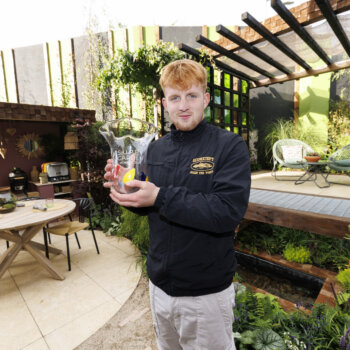
This year’s Super Garden competition winner sponsored by Bord Bia at Bloom was awarded to a second year apprentice on the horticulture programme at the Teagasc College in the national Botanic Gardens.
Sean Melia from Meath displayed his winning garden “Urban Jungle” at this year’s Bloom event in the Phoenix Park, a fantastic achievement for the young apprentice.
Both horticulture apprentice programmes have participants from across the country and the block release nature of the programme lends itself to a broad geographical spread.
Both programmes are two years in duration and intakes are taking place in August /September for the new programmes.
Both colleges also offer courses for full and part-time students in horticulture through Certificates, Advanced certificates and Degrees awarded by SETU in Waterford.
Any queries can be directed to the Botanics in Dublin and Teagasc Kildalton in Kilkenny at botanic.college@teagasc.ie or Kildalton.college@teagasc.ie
Read more: GLAS Special: Teagasc – Sportsturf apprentices ‘on track’ to make history in 2025
© 2026, Growtrade.ie by Patryk Goron
Related Articles
UCD and Teagasc launch third FAST-IP programme to develop next generation of agri-tech start-ups →


Fans 0
Followers