


The future is growing – AI’s expanding role in horticulture
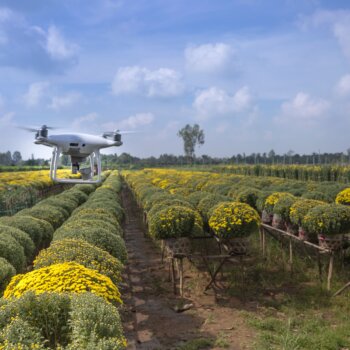
Michael Hagan, horticulture lecturer at TU Dublin, shares his views on AI's expanding role in horticulture
 Print
Print26 June 2026
Artificial intelligence is moving rapidly from theory to practice across horticulture.
In this exclusive Q&A, Michael Hagan, lecturer in horticulture at TU Dublin discusses how AI is helping growers improve efficiency, address labour shortages and enhance sustainability, while highlighting the importance of careful investment and skilled oversight.
1. What does “AI” actually mean in the context of horticulture and related sectors?
Over the past few decades, the development of automated systems in horticulture has increased in complexity and scale of use, for example, automated glasshouse climate control systems, automated plant moving systems and automated fertigation systems (irrigation combined with fertilising for plants.) Until recently, many of these systems relied heavily on human programming and oversight to ensure that the systems performed as planned/expected – someone was monitoring the systems to ensure that the temperature didn’t rise or fall too much, or that the irrigation system was applying the correct amount of water as required; in essence, many of the systems were pre-programmed to control a required set of parameters (minimum and maximum temperature, relative humidity, etc.) and delivered that preset programme. These systems relied heavily on sensors placed throughout the glasshouse/crop to report the current temperature/rootzone moisture level, etc. to the control unit, which then activated the heating/venting/irrigation system to correct the situation as appropriate.
In the last few years, developments in generative artificial intelligence, machine learning, deep learning and the Internet of Things have resulted in automated systems becoming capable of a form of decision-making, increasing the level of automation in glasshouses for example, and reducing the level of human oversight required for simpler decisions.
The use of robots and unmanned aerial vehicles (aka drones) has increased considerably in recent years as the technology has improved to the extent that robots are able to select and pick delicate produce such as strawberries and mushrooms at the ideal stage for harvesting without damaging them. Drones are being used to apply Plant Protection Products and fertilisers reducing the risk of exposure for the operators, who can manage the devices from a safe distance. Drones are also being used to identify pest and disease problems and potential under nourishment in crops, with AI systems analysing high-definition images taken by cameras onboard the drones (often using hyperspectral imaging and 3D laser scanning) to pinpoint potential problems/areas in the crop; appropriate action can then be taken quickly to eliminate or control the problem that has been identified.
These developments are seen as a major advantage for growers and horticulturists as they may be used to handle tasks that once had to be conducted by human labour. There are various reasons why seasonal and temporary/casual labour is not as readily available or affordable as it was in previous years/decades; the adoption of advanced technologies provides the growers with an alternative option to get the work completed with less labour.
2. How would you describe the current level of AI adoption across horticulture, landscaping, nursery production, amenity horticulture and agri-related industries?
AI is being increasingly integrated into more of the traditional equipment and systems used in horticulture so the level of adoption in increasing steadily; many people may not even be aware that they are using forms of AI in updated and modern horticulture equipment, much in the same way that the general public now use many AI technologies daily in their mobile phones (Siri/Google Assistant, navigation apps, voice-to-text, photograph enhancement, etc.) without realising that these are forms of artificial intelligence.
Automated glasshouses, robotic planters and harvesters, robotic lawnmowers, etc. are increasingly being used in the industry, often replacing mundane, repetitive tasks where human labour is becoming increasingly difficult to source, or too expensive in the current markets where margins are extremely tight. Even the latest series of Clarkson’s Farm features a robotic tractor, although not without some teething issues – not unusual for Jeremy, or many other growers!
In some parts of the world, hydroponic growing systems – often in repurposed shipping containers – are being mooted as a solution to the problem of providing food for increasingly large urban populations. An often offered argument is that locating the “shipping container farm” in or near towns and cities reduces the carbon footprint of food production by shortening the supply chain – growing the food very close to where it will be consumed; many of these systems are highly automated with AI used to assist in the management of the automation systems.
Research and development are continuing apace, and it is envisaged that horticultural equipment and systems will become more reliant on various existing and new forms of AI to increase their capability, complexity and reliability, further reducing the need for human oversight.
3. Where are you seeing the most practical, real-world uses of AI in horticulture right now?
The use of AI-enabled drones for conducting tasks that may be time consuming (e.g. crop walking), difficult, or expose humans to potential danger (e.g. applying Plant Protection Products) is one of the most practical uses at present. Drones with high-definition/3D cameras can travel quickly over large areas of crops, returning images for analysis by AI-enabled systems; the system can analyse the images for the slightest changes in colour, which may indicate nutrient deficiencies, pest/disease problems or drought/overwatering issues. The system will pinpoint with accuracy where the problems exist allowing remedial actions to be taken and the system may suggest a potential solution; the horticulturist will make the final decision on the action to be taken, while the action may be carried out by the drone or another automated system.
The AI system provides detailed information to the grower, offers a solution to the problem allowing the grower to make the final decision and deploy the solution; this may result in significant time and labour savings for the enterprise, increasing efficiency and productivity, and ultimately returns and profits.
The most up-to-date AI algorithms, using data from improved crop sensor technology and local weather data, predict and design the optimum schedules for irrigation and feeding crops to make the best use of valuable resources, such as clean water and nutrients, minimising waste by reducing overwatering or over-fertilising; this maximises the efficiency of the operation and should increase financial returns/profits.
The developments in robotic harvesting for crops, such as soft fruit and mushrooms may offer an effective solution to the labour shortages being experienced in these sectors. The latest technology has significantly improved the selection process of identifying individual specimens that are ready for picking, while the mechanical attributes of the robots have significantly improved, resulting in reduced physical damage, such as bruising to the produce.
4. What examples stand out internationally that Irish horticulture professionals should be paying attention to?
One of the biggest challenges for Irish horticulturists wishing to adopt the latest AI technologies is the cost of the systems. On a global scale, many Irish horticulture enterprises are significantly smaller than similar operations in, for example, the Netherlands, Spain, Italy, USA, Canada, so the cost of adopting new AI systems may be significantly higher per square metre of growing area than for these larger operations. However, most technologies are available to Irish growers if they are in a position to make the investment required.
One of the most promising aspects of AI tools and systems is the potential for improving the sustainability of the enterprises using the AI tools. Benefits, such as reducing the over-application or waste of expensive inputs, such as nutrients, plant protection products and water would have positive impacts on the environment and on the efficiency and profitability of the enterprises.
Reducing the need for expensive labour is another aspect of AI that could improve the efficiency and profitability of horticultural operations; AI-controlled robots may work around the clock as appropriate for the crops – not needing the evening/night off and not needing breaks during the workday (subject to battery charging or power availability). Robots are particularly suited to repetitive, mundane tasks as they do not have lapses of concentration or develop repetitive strain injuries. While still relatively extremely expensive, robot technology for planting, weeding, harvesting, etc. is already available and should continue to improve in efficiency and become more affordable as mass adoption in the industry occurs.
Crop monitoring is another valuable benefit of AI systems that could be of great value to Irish horticultural enterprises – monitoring growth, predicting yields, monitoring the growing environment and carrying out micro-adjustments where needed to maintain optimum growing conditions all the time. While human oversight of the entire system will still be required, there are options for remote access, permitting the growers to concentrate on other tasks that cannot be automated, or take some rest, knowing the system is constantly monitoring, adjusting, and reporting any changes that occur.
5. Beyond production horticulture, where could AI impact garden centres, landscaping firms, suppliers and distributors?
Many distribution centres around the world incorporate advanced automated systems to fulfil orders, collecting the different individual products to assemble loads; this reduces labour requirements, allows for round-the-clock operations, and increases the overall efficiency of the operation, and would be relatively easy to apply to horticulture supply and distribution enterprises.
Landscape designers and landscaping contractors could make use of suitable plant databases and specific information systems relating to the customer’s garden location to choose plants that are best suited to the location. Some of these systems may suggest layouts that combine optimum aesthetics with ecological benefits, such as enhancing and supporting biodiversity. Augmented reality technology is becoming more widely available, and this could be used to superimpose the designer’s vision for the next garden onto the existing garden; thus, allowing the customer to ‘see’ what their new garden would look like and deciding if they are satisfied with the new design before the work begins, avoiding disappointment or realising that the design doesn’t work after the job has been completed. These technologies could assist many people, but could also be seen as removing or reducing the need for qualified horticulturists in the landscape design and build sector.
Garden centres generally hold plants for much shorter periods than the nurseries where the plants are propagated/raised but still must deal with issues, such as irrigation and maintaining the plants in optimum condition to drive sales. Automated systems for irrigation and checking on plant condition and health could retain the quality of the plants and reduce losses. As the garden centres want a strong customer footfall, most of the automated tasks could be carried out when the centres are closed, minimising the need for staff to work overtime and preventing potential injury hazards to customers. Modern point-of-sale systems may supply data on the most popular sale items, busiest times, etc., so predictions for future years could become more accurate through the use of AI tools to analyse previous sales data, combined with calendar events and weather forecasts, helping the garden centres to order appropriately as the season picks up in spring.
6. There’s understandable concern about automation replacing jobs. In horticulture, is AI more likely to replace roles, or reshape them?
As already alluded to earlier, AI-enhanced automated equipment and systems have the potential to replace many mundane and repetitive tasks in horticulture and similar industries This could result in more interesting and higher skilled work being available for staff, while reducing health problems, such as repetitive strain injuries and issues related to exposure to materials potentially harmful to human health. In many parts of the world, there are shortages of labour available for carrying out these repetitive (often low skilled and poorly paid) tasks so the automation option will be an advantage here, for example, weeding crops, harvesting, and sorting/grading fruit and vegetables. Problems potentially encountered by humans, while carrying out these tasks, such as boredom, lapses in concentration, the need for breaks, and limited working hours would be eliminated by the automation of (parts of) the production process.
Most opinion in the industry would suggest that human oversight and decision-making at higher levels will continue to be required in the industry. The robots and equipment may be able to carry out many simpler tasks on an ongoing basis, but expert horticulturists and growers will still be needed to make decisions about ideal growing systems, problem-solving and final oversight of quality assurance of produce. Therefore, some roles are likely to be replaced by the automation, but many of the other existing/future roles will require upskilling and further training, resulting in better physical working conditions and improved remuneration packages.
One of the more controversial aspects of the development of AI is that of the amount of energy required to power the systems. Much of this additional energy is expended in operating the data centres where the exceptionally large quantities of data are stored, and in order to access the systems, the growers will need to pay for the costs involved, possibly reducing the viability for smaller growing enterprises.
Another aspect is the very substantial cost of developing these AI systems, with a limited number of companies doing the investing; these companies will need to make a return on their investments so it is envisaged that access to the systems may be relatively expensive for horticultural enterprises, especially in markets where their margins are limited.
Ownership of the data is also expected to be an issue as the companies supplying the AI technology collect data from the growers, and that data is then used to further train/improve the AI systems which then gather even more data from the growers. There are some ethical issues around this topic that require thought and discussion to ensure that horticultural enterprises don’t run into issues where commercially sensitive information about their operations may be gathered by the AI companies and potentially shared with competitors, directly or indirectly.
7. What skills will horticulture professionals need over the next five to ten years to work effectively alongside AI technologies?
It is envisaged that many of these automated systems will become more intuitive and simpler to use in relative terms, in the same way that extremely complex mobile phone technology can be easily accessed utilising through apps with clear, simple user interfaces; even young children quickly learn how to use apps on modern phones.
Each new iteration of the AI systems is likely to have augmented capabilities and be able to carry out more complex tasks, so the horticulturist will need to develop the skills to manage the systems; as more and more data is collected and analysed by the AI systems (e.g. weather information, temperature, water usage, fertiliser levels, soil conditions, etc.), they should provide the horticulturist with more accurate information in formats that will be useful for making decisions about the growing crops and predictions about yield, quality, etc.
The horticulturist will need to develop the skills to effectively use the systems, understanding the data outputted by the systems and be able to interpret and incorporate that data into the traditional horticultural growing systems to achieve the optimum yields in terms of quality and quantity. For many horticulturists, there may be a learning curve initially, but it is envisaged that learning to work with the systems will become easier as the systems improve and as the horticulturists become more familiar and comfortable with the technology.
8. What mistakes should horticultural businesses avoid when exploring AI tools?
AI has made great progress since becoming much more widely available in the recent past and offers great opportunities for developments in many aspects of daily life, not just in the horticulture industry. However, like every new ‘invention’, some degree of healthy scepticism or caution should be applied before ‘diving in’ wholeheartedly. The AI tools will continue to develop and improve in the coming years, maybe to the extent that we cannot envisage what AI may be able to do for us in the future!
The many benefits of AI have been widely reported, but some of the potential issues have received less public attention. The AI algorithms develop and ‘learn’ by sifting through huge volumes of data, analysing the data, identifying patterns, and ultimately making predictions based on the data that has been analysed. Over time, as new data is fed into the system, the AI tools will adjust and update their output based on changes they have observed during the analyses. Therefore, the quality and veracity of the data used to train the tools is of utmost importance – poor or false data will lead to poor outputs from the AI systems and potentially create more problems rather than solving existing ones.
AI tools may also make mistakes or give erroneous or false information or outputs, presenting them as the truth, a phenomenon that has been termed “hallucinating”; the opportunity or likelihood of hallucination may be increased where relatively smaller amounts of data are being analysed by the AI tools as differing information or unrepresentative data in a small data set may not permit the AI tools to identify patterns or consistencies in the information.
A critical aspect of using AI tools is the clarity and succinctness of the prompts or instructions that are inputted to the system/tool. If the prompt/instruction is vague or unclear, the system may interpret it incorrectly or may give vague or incorrect outputs. Those operating the new system may need additional training to ensure that they can make the optimum use of the new system.
Another aspect to be considering when evaluating AI tools or systems is the ease with which they may be integrated into existing systems; if the proposed addition is incompatible with existing systems, a complete change of the entire system may be required, potentially resulting in considerable additional costs. Even where it appears that the proposed AI tool may be retrofitted to existing systems, at some point in the future it may become apparent that the two systems are not working together as was initially expected.
The costs of installing additional AI tools and the ongoing licensing arrangements may be substantial, so it is essential that the systems be properly evaluated in terms of the potential benefit(s) for the operation; if the proposed upgrade can be shown to provide a good return on the investment, then the upgrade may be viable and worth doing.
An issue already alluded to is that of the ethical question over the data collected by the system and the ownership of that data in the future. As there are relatively few organisations developing AI tools, they may acquire an unfair control over the enterprises using the systems and supplying the data; those enterprises may not be in a position to acquire or use other AI tools and systems, leading to a reduction in competitiveness in the market and domination of the market by relatively few AI companies.
9. How well positioned is Ireland to adopt AI in horticulture compared with other countries?
The Irish horticulture sector would be very capable of adopting AI due to the progressive nature of the industry. There are many highly trained and experienced horticulturists working in the industry and they are always evaluating innovative technologies and systems to improve the output and efficiency of their operations. Irish horticultural enterprises operate in very competitive markets and adhere to regulations and quality assurance schemes to offer produce and services of the highest standard; adopting AI tools that would increase their efficiency would not concern the majority of the businesses in the horticulture sector.
Ireland has a complicated relationship with the data centres that support the developments in AI so widespread adoption of AI tools across the Irish economy could result in capacity issues. Data centres tend to use exceptionally large quantities of electricity to power the infrastructure that supports AI and large quantities of water to remove the heat that is produced by the equipment. The national electricity grid appears to be very close to full capacity at present and at risk of partial shutdown due to over-demand at peak times, so major investment will be needed to improve capacity to handle future demands, especially as Ireland has targeted significant increases in the number of electric vehicles on the roads.
Upgrading of the national water supply infrastructure is also needed as sources suggest that housebuilding is stagnating at present due to a lack of water supply for new homes; more AI would require more data centres and consequently more water. Increased electricity and water usage could have further implications and impact on the natural environment. Most horticultural enterprises are heavily dependent on energy and water, and as even short outages of both could have substantial negative impact on growing crops, the networks may need significant upgrading as AI tools become more commonplace, balancing the impacts of this on the environment and on climate change reduction targets.
Once a major problem in most regional parts of Ireland, internet connectivity is another issue that will impact the adoption of AI as the AI tools and systems need to use the internet to upload the latest data and access the data already stored in the data servers. Significant improvements in the roll-out of broadband services has taken place in recent years, but there are still many blackspots where the internet connection – if it exists at all – would not be sufficient for the fast transfer of data between the AI tools/systems at the horticultural enterprises and the data centres; this would be a significant consideration in deciding whether to adopt AI systems at present.
Modern IT systems are constantly under attack from hackers and other adverse actors so any breaches of the AI systems could result in serious repercussions for the industry in terms of stolen data or interference with the glasshouse management systems for example.
Read more: Fertiliser market update: current situation and price trends
© 2026, Growtrade.ie by Patryk Goron
Related Articles

Industry Sentiment Survey – shared challenges, different priorities →







Fans 0
Followers