


Small Talk with programme director of the horticulture degree in SETU Waterford – Dr Cara Daly

"There are excellent careers in horticulture, but we need to do more to showcase them" - Dr Cara Daly talks about the horticulture industry
 Print
Print3 June 2026
In association with Gardenworld Nurseries
At Growtrade, we’re running an interview series titled ‘Small Talk’, where we talk to various influential members of Ireland’s horticulture trade.
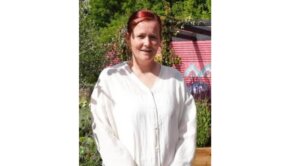
This week’s conversation is with the programme director of the horticulture degree in SETU Waterford – Dr Cara Daly.
How did you first get involved in the horticulture sector?
After my Leaving Cert, I initially went to the UK to study Sports Science. It didn’t take long to realise that while I loved playing sport, I didn’t enjoy studying the science behind it. I ended up working in the pharmaceutical sector for about six years, both in the UK and later in Dublin.
While it was a good experience, I didn’t have a qualification and could see that my career progression would be limited. I also really missed being outdoors. I had always done well in school, and I felt I could do more with my abilities if I went back to education.
So, about eight years after being offered a place to study science in UCD after my Leaving Cert, I decided to take that path. Once I started, I quickly realised I loved plant science and ended up specialising in botany.
At that stage in my life, I made a conscious decision to study something I genuinely enjoyed rather than focusing purely on career prospects. Someone once told me that if you study something you like, you’re more likely to be good at it, and opportunities will follow. That turned out to be true.
I went on to complete a PhD in UCD, and knowing I wanted to teach, I applied for a horticulture lecturer position in what is now SETU. I was fortunate to get the role, and I haven’t looked back since.
What was one of the proudest moments in your career to date?
There have been a few moments I’m proud of, as my work spans plant science, biodiversity, student support, horticulture science writing for The Irish Garden Magazine, and equality, diversity and inclusion.
One that stands out is receiving the inaugural Vicky Phelan SETU EDI Award in 2023. It recognised voluntary work I had been involved in around equality and inclusion within the university, including developing policies and supporting staff networks. It was a really meaningful acknowledgement of that work and an absolute honour to be mentioned in the same sentence as Vicky Phelan.
What was one of the greatest challenges you’ve faced in your career to date?
One ongoing challenge across the horticulture education sector is attracting students at Level 7 and Level 8. This is despite the fact that the industry is vibrant and offers a wide range of rewarding career opportunities. The real challenge is getting people to see that.
A big part of it comes down to awareness. Many students just do not realise what is out there in horticulture, and the same goes for parents who are helping guide those decisions. In my experience, while there are some excellent career guidance counsellors, horticulture is not always front of mind when career options are being discussed, and it can be easily overlooked or even dismissed as a non-runner.
From talking to colleagues across other colleges and universities, there are plenty of good ideas about how we could improve awareness, especially when it comes to engaging with schools. The difficulty is that the time and resources are not always there to follow through on those ideas in a meaningful way.
This is where the industry itself could play a part. By working more closely with education providers and supporting outreach efforts, there is a real opportunity to change perceptions and build a stronger pipeline of future talent. Anyone reading who would like to support us, please get in touch!
Could you give us an example of a recent success you had in your work?
My SETU colleague Yvonne Grace and I developed a new MSc and Postgraduate Diploma in Organic and Biological Horticulture. It’s a flexible, part-time programme delivered mostly online, designed to suit people already working in the industry.
We’ve had a really positive response from across the sector, which has been hugely satisfying. It’s encouraging to see strong engagement with further education in this area.
SETU Waterford is also offering a 4-year level 8 BSc (Hons) in Horticulture degree on the CAO for the first time this year. So, a new exciting chapter awaits SETU Horticulture and our collaborators in Teagasc’s Kildalton College, and the College of Amenity Horticulture in Dublin.
What are the greatest challenges facing the industry today?
Put simply – attracting people into the industry.
There are excellent careers in horticulture, but we need to do more to showcase them. I’d really encourage those already working in the sector to get involved at a local level. Whether that’s attending school career events with stands, supporting school gardens, or offering work placements to transition year students, even small efforts can make a big difference.
When I first entered the sector, I was surprised by some of the negative messaging that sometimes comes from within the industry itself. We need to be careful not to talk ourselves down because although we should recognise the challenges, there is also an awful lot to be positive about.
What are the greatest opportunities facing the industry today?
There is a clear and growing demand from consumers for sustainably produced food and environmentally responsible horticulture. Organic and biological systems are central to meeting that demand, and they present a real opportunity for the Irish industry to grow and differentiate itself.
With the right level of government support and investment, we are well positioned to expand in this space. It also aligns with a broader public awareness around environmental stewardship, food security and a genuine interest in how food is produced.
At the same time, I would like to see greater adoption of technology-enhanced production systems across the sector. There are already excellent examples of innovation in Ireland and internationally, from precision growing systems to data-driven crop management.
This is where young people can play a really important role. They bring strong digital skills, fresh thinking, and a practical, can-do approach to problem solving. Whether it’s using sensors, automation, or data to improve efficiency and sustainability, the next generation has the potential to bridge key gaps in production and help drive the industry forward.
What advice would you give to someone just starting their career?
Get as much experience as you can across different areas of the industry. Build practical skills and keep developing them.
Talk to people who are starting out and those with years of experience. Go to talks, visit gardens, read widely, and if you can, travel and see how things are done in other countries.
Most importantly, back yourself.
What are your hopes for the future of Irish horticulture?
I would really like to see stronger national awareness of the opportunities that exist within horticulture as a career. With the right support from government and continued engagement from the industry, together we can do a much better job of showing young people what’s possible in this sector. It has huge potential, and we need to make sure that potential is visible.
There is a lot of discussion at the moment about the viability of the small family farm in Ireland, particularly for dairy, beef, or tillage. However, that same farm can be ideally suited to horticulture, especially where enterprises are diverse and built around multiple income streams.
Horticulture offers flexibility, innovation, and the ability to add value in ways that are not always possible in more traditional farming systems. In the right hands, the small family farm is not a limitation because with the right knowledge and approach, you can make it pay.
Whether they are graduates of the full-time programme or students with us for a short time for upskilling, our graduates are leaving us with a strong mix of practical skills, scientific knowledge, and real-world experience. They are work-ready and capable of contributing immediately in a range of roles. Importantly, they also develop solid business awareness, which gives them the confidence to step into existing businesses or, in many cases, to start their own.
If we can better connect that talent with the opportunities that exist, there is a real chance to strengthen, both the industry and rural communities into the future.
Small Talk is produced in association with Gardenworld Nurseries, one of the country’s leading wholesale plant nurseries, specialising in high-quality specimen trees, hedging, shrubs, and perennials.
Read more: Small Talk
© 2026, Growtrade.ie by Patryk Goron
Related Articles

Small Talk with landscape designer at Tierney Haines Architects – Nicola Haines →


Fans 0
Followers