


Scientists contribute to global examination of pollinator habitat
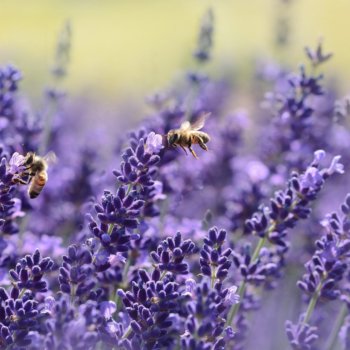
MSU Entomology professor and former graduate student collaborate with team of 80 researchers to examine global pollinator landscape needs
 Print
Print30 October 2025
Michigan State University distinguished professor Rufus Isaacs and CANR alumna Gabriela Quinlan (Ph.D. ’20), collaborated with researchers from 19 countries to develop a framework for informing conservation policies to increase the quantity and enhance the quality of pollinator habitat in agricultural landscapes.
Pollinator habitat is essential for maintaining beneficial insect populations and supporting critical ecosystem functions, but habitat protection targets are often varied and poorly defined.
The research team sought to develop a framework to assess habitat quantity needs and the threshold at which populations respond more to increased habitat quality than quantity.
A team of more than 80 researchers provided and synthesized data from 59 studies to define minimum the habitat thresholds needed to support healthy insect pollinator populations on various agricultural landscapes across the United States and in areas around the world.
The paper, “Critical habitat thresholds for effective pollinator conservation in agricultural landscapes” was published in Science in September.
Providing guidance to landowners about how much land needs to be prioritized to support beneficial insects or advising conservation programs on where to prioritize resources is challenging, with researchers often relying on limited local and regional data.
The framework in Science provides clear benchmarks on the amount of low-quality pollinator landscape needed for essential insects like hoverflies, solitary bees, bumble bees and butterflies.
“We are often asked how much of a landscape will need to be prioritized to support beneficial insects. Landowners have the option to designate more habitat for pollinators or you could increase the quality of the habitat already there,” Isaacs said.
He added: “this paper explores the interaction between those two approaches and determine ways to maximize available landscape by examining a big data set with all the power you get from looking at ecosystems around the world.”
In low habitat quality conditions, hoverflies had the lowest land-need threshold at 6% semi-natural habitat cover, followed by solitary bees (16%), bumble bees (18%), and butterflies (37%).
“There has been a lot of discussion about how much pollinator habitat is needed in the landscape, and ten percent is a good round number. It’s simple to remember, but I think the data from this study shows that we need more land than that for some of the most beneficial insects,” Isaacs commented.
Quinlan conducted an extensive survey of pollinator landscape in Michigan, with her data used in the new study.
“Dr. Quinlan had collected pollinator data for almost four years at MSU, and she was contacted to see if her data would fit this study and their criteria, and indeed she did. Dr. Quinlan provided the data, and we worked with the team to review and help develop the manuscript,” Isaacs said.
“Critical habitat thresholds for effective pollinator conservation in agricultural landscapes” provides one of the most comprehensive examinations of pollinator land area and quality published to date, and Isaacs expects the insights from large-scale pollinator research studies to improve as datasets become available from other locations around the world.
Read more: Teagasc and Heritage Council promote grassland biodiversity at national event
© 2025, Growtrade.ie by Patryk Goron





Fans 0
Followers