


Data, science and collaboration to drive the next generation of sustainable horticulture
Better use of data, stronger scientific evidence and greater collaboration across the supply chain are emerging as key priorities for a horticulture industry facing growing commercial and environmental pressures
 Print
Print8 October 2026
The future of horticultural production will depend increasingly on the industry’s ability to combine productivity with sustainability, according to discussions at the AIPH Horticultural Industry Conference held as part of the organisation’s 78th Annual Congress in Bari, Italy.
During the “Growing Productivity and Growing Sustainably” sessions, international experts examined some of the most pressing challenges facing ornamental horticulture, including digitalisation, artificial intelligence, growing media, plant health and crop protection.
For growers, the message was clear: sustainability and productivity should not be viewed as competing objectives. Instead, better information and evidence can help businesses make more informed decisions while improving efficiency and reducing environmental impacts.
Data moving to the centre of production
One of the strongest themes to emerge from the conference was the growing importance of data.
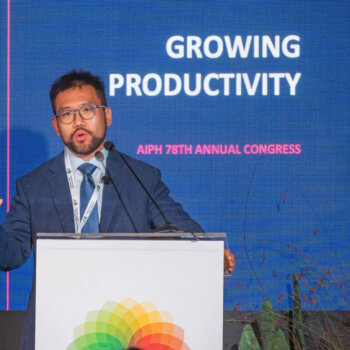
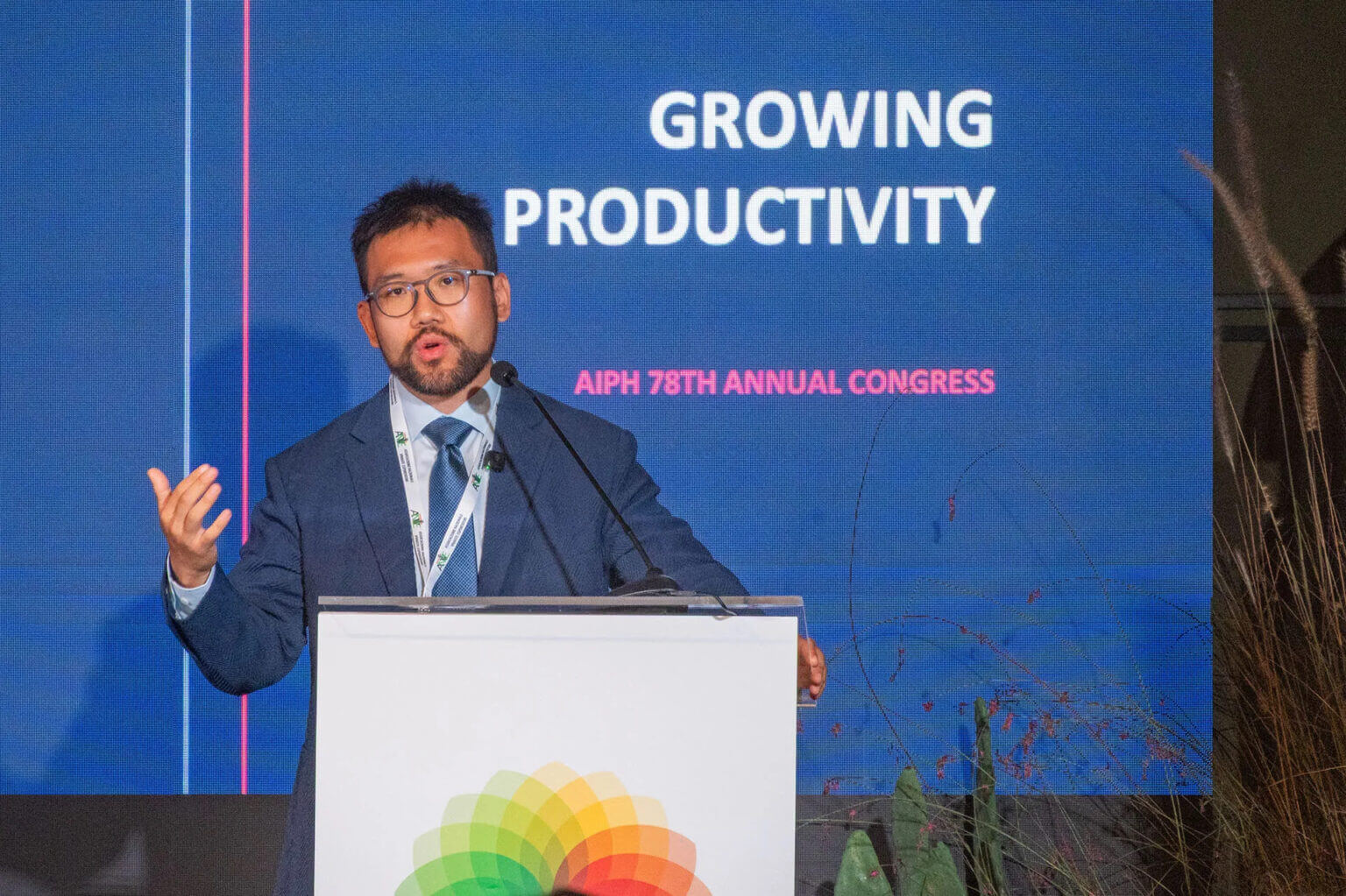
Rick Yin, founder and CEO of Bornsuntech Smart Agriculture Company in China, outlined how digital systems can help growers move from production based primarily on experience towards increasingly data-informed decision making.
Data can be collected across areas, such as crop production, labour, finance, pest management, and post-harvest operations. When these datasets are brought together, growers can begin to identify patterns and areas where improvements can be made.
Artificial intelligence can then help turn that information into practical insights.
However, Yin stressed that AI should be viewed as an enabling technology rather than a replacement for people. The objective is to give management teams better information with which to make decisions.
For horticultural businesses, this could mean starting small – using digital tools to address a specific production or operational challenge before gradually expanding the use of data across the business.
The approach is particularly relevant to growers facing increasing pressure to control labour, energy, input and production costs.
Rethinking sustainable growing media
Growing media was another important focus of the conference.
Dr Alexander Sentinella, director of science at Growing Media Europe, argued that the sustainability of growing media cannot be judged simply by looking at one material or one environmental characteristic.
Instead, environmental, economic and social factors need to be considered alongside the performance of the growing medium within the production system.
That distinction is important for growers.
A growing medium with a lower environmental footprint in isolation may not necessarily deliver the lowest overall impact if it results in poorer crop performance, increased crop losses or greater requirements for water and fertiliser.
The discussion highlights the importance of looking at whole production systems rather than individual inputs.
It also comes at a time when horticultural businesses are facing increasing scrutiny around environmental claims. The industry will need robust evidence to demonstrate exactly what sustainability claims mean and how they have been measured.
For Irish growers, this is likely to become increasingly relevant as customers, retailers and policymakers demand greater transparency around the environmental performance of horticultural products.
Plant health and the changing risk landscape
Plant health provided another major link between sustainability and productivity.
Sarah Brunel, implementation and facilitation lead at the International Plant Protection Convention (IPPC), highlighted the increasing risks associated with the international movement of plants and plant material.
Globalisation and climate change are creating new opportunities for pests and diseases to spread, placing additional pressure on producers, regulators and the wider supply chain.
Early detection and rapid response will therefore become increasingly important.
Growers have a particularly important role to play because they are often the first people to notice unusual symptoms or pests within crops.
The message from the conference was that identifying and reporting potential threats early can help prevent outbreaks becoming more widespread and expensive to manage.
AIPH is also working towards a unified framework for an externally audited systems approach to plant health management in ornamental horticulture.
The initiative aims to bring together existing plant health standards into a framework that can support both biosecurity and international trade.
Finding alternatives in crop protection
Crop protection was another area where the industry faces a difficult balancing act.
Stephanie Miltenburg, head of public affairs at Royal FloraHolland, outlined the Netherlands’ new sector-wide agreement aimed at reducing the environmental impact of crop protection.
The approach brings government, industry and other stakeholders together around shared responsibilities, with environmental objectives being considered alongside economic viability and innovation.
Importantly, the focus is not simply on reducing individual crop protection products, but on reducing their overall environmental impact.
That distinction matters because growers need practical alternatives if conventional products become unavailable.
Conference panellists highlighted a common challenge across international markets: the number of conventional crop protection products available to growers is declining, while biological and alternative solutions are not always becoming available quickly enough.
The transition is already under way, however, with growers adopting biological controls, improved monitoring, integrated pest-management approaches and new technologies.
What does this mean for Irish horticulture?
Although the discussions took place at an international conference, many of the issues are directly relevant to the Irish horticultural sector.
Irish growers are operating in a market where production costs, labour availability, environmental expectations and plant health requirements are all becoming increasingly important.
The conference discussion suggests that the businesses best positioned to respond will be those capable of measuring what happens in their production systems and using reliable information to improve them.
That could mean greater use of digital crop monitoring, more detailed recording of inputs and outputs, improved pest surveillance or better analysis of labour and production efficiency.
It also means taking a more sophisticated approach to sustainability.
Rather than relying on simple labels or individual characteristics, growers and their customers will increasingly need to understand the environmental performance of the complete production system.
Productivity and sustainability go hand in hand
Perhaps the most important message from the AIPH conference is that productivity and sustainability should not be treated as separate agendas.
Efficient use of water, fertiliser, energy, labour, and crop protection products can improve both the economic and environmental performance of a business.
Better data can support those decisions. Science can help determine which approaches actually work. And collaboration between growers, researchers, regulators, suppliers, and industry organisations can help ensure that practical solutions reach businesses on the ground.
For Irish horticulture, that combination could prove increasingly important as the sector navigates a more demanding operating environment.
The future of sustainable production will not simply be about using fewer inputs. It will be about using better information to make better decisions – while maintaining the quality, productivity and commercial viability of the crop.
As the AIPH discussions demonstrated, the next phase of horticultural sustainability is likely to be driven as much by data, science and collaboration as by the technologies and products themselves.
Read more: The future is growing – AI’s expanding role in horticulture
© 2026, Growtrade.ie by Patryk Goron
Related Articles

Klasmann-Deilmann seeks account and customer support manager for Ireland →




Fans 0
Followers